Stay beneath the rocks, visit the monasteries thoughtfully, and give this part of mainland Greece more than a rushed stop.
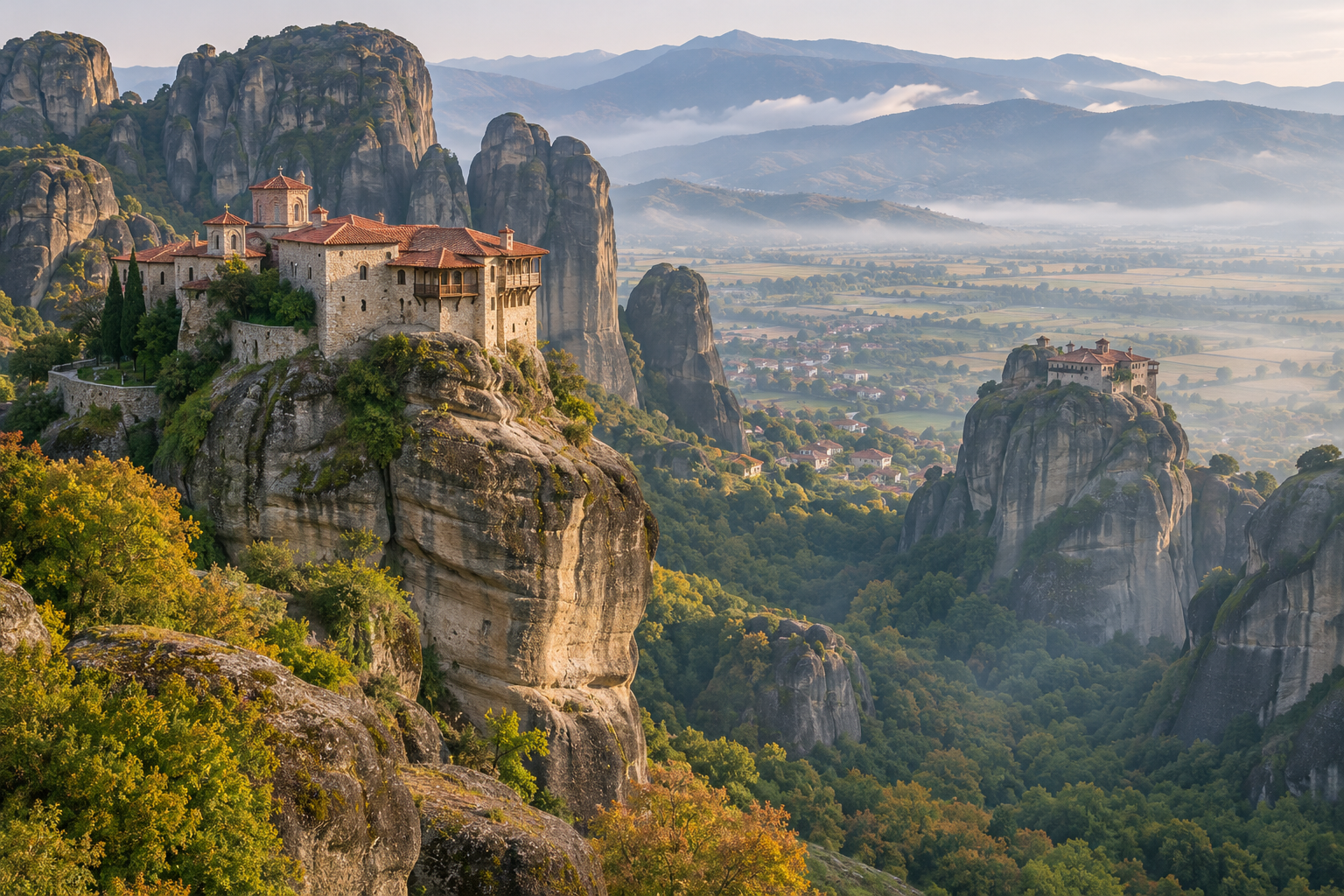
At Meteora, the relationship between rock and building carries the journey. Monasteries occupy the tops of immense formations above Kalambaka and Kastraki, while the Thessalian plain opens below. Seeing a single viewpoint is striking; spending enough time to understand the different levels of the landscape is more rewarding.
A two-night stay creates a useful framework. Arrive and settle beneath the rocks, devote a full day to a small number of monastery visits, and leave room for a village walk or another perspective before departure. This approach suits travelers extending a mainland route from Athens, particularly those who value landscape and religious history more than covering many regions at speed.
Choose your base by the evenings you want
Kalambaka is the larger service center at the foot of Meteora. It is practical for meals, supplies, and onward travel, and the rocks remain a powerful presence above town. Kastraki, immediately beside the formations, offers a village setting and a closer sense of their scale. Neither choice means sleeping on top of the monastery circuit; you still need a plan for reaching the upper roads and entrances.
Think about arrival as carefully as sightseeing. A late arrival followed by an early departure gives little margin for the weather or the physical effort of visiting. If you rely on public transport, confirm the current long-distance journey and local connections before choosing accommodation. A rail station appearing on a map does not establish that a particular service or connection operates on your travel date.
Visit fewer monasteries with more attention
Meteora's monasteries are active religious houses, with individual visiting arrangements. Great Meteoron and Varlaam are prominent names on the upper circuit; Roussanou, St. Nicholas Anapausas, Holy Trinity, and St. Stephen provide other perspectives and approaches. They are not interchangeable photo stops, and trying to enter all six in one day can reduce the visit to stairs, queues, and the next parking space.
Choose two or three according to opening arrangements, your interests, and physical access. Begin by understanding what each visit requires. A bridge approach, a sequence of steps, and an exposed walk from a road are materially different experiences. Anyone with limited mobility should contact the monasteries or a knowledgeable local operator about the specific route, rather than relying on the broad claim that Meteora is accessible by car.
Inside, let the religious setting determine your pace. Follow the posted dress requirements, observe restrictions on photography, and keep conversation subdued. Frescoes, courtyards, small museums, and views are parts of a visit that takes place within a working spiritual community. The courtesy is straightforward: enter as a guest and allow the place to remain more than a backdrop.
Separate the road circuit from the walking day
The upper roads connect important viewpoints and monastery entrances, but a scenic road is not automatically a comfortable pedestrian route. Traffic, bends, exposed edges, and limited shade can make walking along it less attractive than a map suggests. Use a vehicle, a suitable local service, or an organized visit for the road circuit if that better matches your needs.
Walking beneath and between the rocks is a different way to experience Meteora. Choose a marked, appropriate route and understand its terrain before setting out. A guide can help distinguish an established path from a line that appears plausible between the formations. Rock climbing routes and monastic access paths are not ordinary sightseeing walks, and scrambling toward a photograph is a poor substitute for route planning.
Carry water and use footwear that suits rough ground. In wet weather, smooth surfaces and stone steps can be slippery; in hot conditions, an exposed ascent becomes more demanding. Keep a walking plan short enough to turn back comfortably. The landscape does not require a long trek to make an impression.
Spend time below the famous skyline
Use the first evening for a walk through Kastraki or Kalambaka, keeping the rocks above you rather than immediately driving to the highest view. Buildings at their base make the formations' size legible. A meal after the day visitors have dispersed can also give the stay a calmer rhythm, without relying on the promise of an empty destination.
Kalambaka's Church of the Dormition of the Mother of God adds a historical thread at ground level. It is a useful reminder that the region's religious heritage extends beyond the summit monasteries. Choose such a stop because you want the context, rather than to fill every hour between viewpoints.
On a longer stay, Trikala offers a contrasting urban chapter in Thessaly. Treat it as a deliberate addition with its own time for streets and a meal, not merely a service stop on the road. The point of extending a Meteora stay is to widen the experience, not to recreate the pressure of a one-day excursion.
Make the onward journey part of the decision
Meteora works best when it belongs to a realistic mainland route. It is not a short diversion between every pair of Greek destinations, and a late connection can undo the benefit of a relaxed morning. Keep a buffer before international departures and avoid pairing a demanding walking day with an ambitious evening transfer.
If your trip is centered on classical archaeology and compact driving excursions, the Argolid from Nafplio may fit more naturally. If the vertical landscape, active monasteries, and contrast between village and rock are the reasons you are coming north, give Meteora those two nights. The extra evening is often the difference between collecting a view and understanding a place.