Choose western Crete as a coherent journey, linking Chania and Rethymno without trying to fit an entire island into a week.
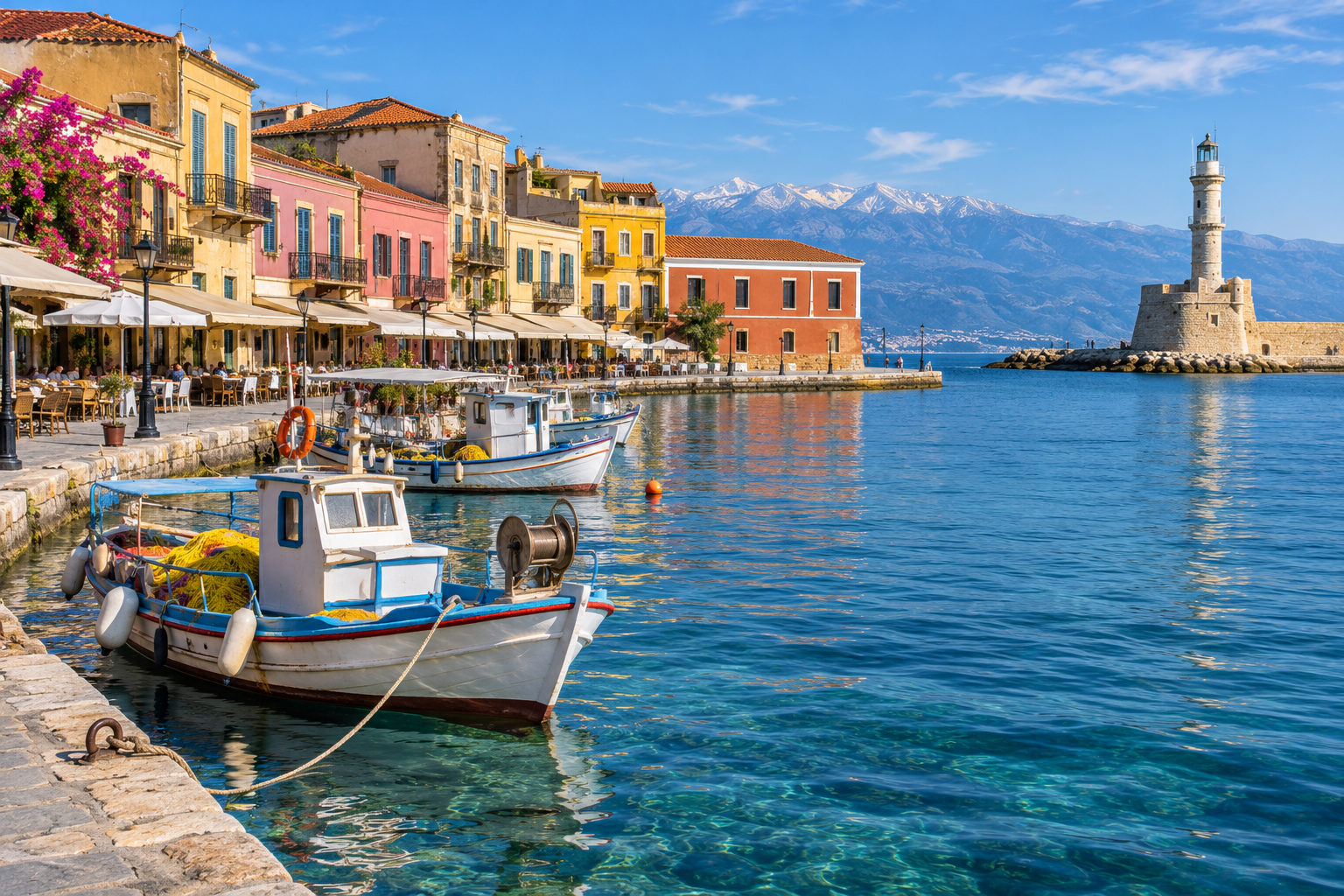
Crete is an island where scale changes the itinerary. Its north-coast cities can appear conveniently close on a national map, while the mountains behind them create very different journeys toward the south. A week divided between western Crete's harbor streets, village interiors, and one carefully chosen coast offers more depth than a string of distant highlights joined by long drives.
The route here uses Chania and Rethymno as its main reference points. It leaves Heraklion, Knossos, and eastern Crete for another trip or a deliberate extension. That is a geographical choice with practical benefits: less time changing rooms, more flexibility around weather, and enough repeated evenings in one place to begin recognizing its rhythms.
Start by understanding Chania's harbor
Chania's old harbor is a useful orientation point, with its lighthouse, long waterfront, and successive layers of Venetian and Ottoman architecture. Walk it at more than one time of day. The harbor's shape and the buildings facing it remain the same, while the balance of deliveries, day visitors, restaurant tables, and evening promenades changes.
Move away from the continuous waterfront frontage into the lanes behind it. The former Jewish quarter around Zambeliou and the eastern quarter of Splantzia offer different street patterns and perspectives on the city's history. These are living streets with homes and businesses; the interest lies in their details rather than a promise that every corner is quiet.
Allow a full city day before collecting a rental car or booking excursions. Chania does not need to function only as a bed between beaches. A museum visit, a leisurely meal, and a second walk through an already familiar quarter can give the trip more character than another distant stop.
Use the landscape behind the city
For an inland day, consider Aptera and the surrounding area east of Chania. The archaeological site introduces a different setting from the harbor: an elevated position, open ground, and views toward Souda Bay. It also gives a western Crete journey an ancient-history thread without requiring an immediate cross-island expedition to Knossos.
The Apokoronas area provides a gentler introduction to village Crete than an ambitious mountain crossing. Villages such as Vamos can anchor a day built around a short walk, a meal, and the agricultural landscape. Give village visits a purpose and some time. Racing through a series of names can leave less impression than spending a morning in one place and noticing how its square, lanes, and surrounding fields connect.
Driving provides flexibility, especially outside the main towns, but it also creates responsibility on narrow streets and winding roads. Park at a suitable edge rather than forcing a car through a lane designed for much smaller traffic. If you prefer not to drive, choose a smaller set of destinations that fit verified bus services or a clearly described organized excursion.
Choose a southern day with care
The temptation to add a famous beach or gorge is understandable. The important question is what kind of day it creates. A road journey across the mountains, a boat connection, and a substantial walk are separate commitments; placing them together requires more than a promising map image.
For a first western Crete stay, select one southern objective and shape the day around it. Paleochora offers a coastal-town option in the southwest, while Chora Sfakion belongs to a different approach through the mountains farther east. These are alternatives, not neighboring stops to collect in the same afternoon. If your priority is the Samaria Gorge, treat it as a dedicated hiking day with its own transport, seasonal access, equipment, and fitness planning. A gorge itinerary should never be an improvised addition to a beach drive.
Sea conditions and mountain weather can change what is sensible. Leave a flexible day in the plan so that a disrupted excursion does not consume the whole holiday. This is especially useful when boats or exposed paths are involved.
Let Rethymno be a second chapter
Rethymno lies east of Chania on the north coast and makes a natural second base for this route. Its old town, Venetian harbor, and Fortezza give it a recognizable structure, but it deserves more than a comparison with Chania. Walk from the waterfront into the lanes, notice the fountains and architectural layers, and spend time beneath the fortress as well as on it.
Two nights allow an arrival evening, a full day, and a departure that need not feel rushed. A shorter visit works if you are continuing across Crete, but make that choice consciously. If the trip ends in the west, returning repeatedly between the two cities may be less appealing than keeping one base and accepting a more selective reach.
Decide how much Crete you want to cover
A simple week might place three or four nights around Chania and two or three around Rethymno, with an inland day and one southern outing. Beach time can be woven into that structure without becoming another checklist. Travelers who prefer fewer moves can stay in one city and make fewer excursions; those with a longer stay can continue east and build a new sequence around Heraklion.
Crete rewards this kind of regional thinking. If you want a smaller island whose main town, villages, and west-coast beaches form a more compact trip, compare our Naxos route. If your interest is a mainland base with several distinct historical excursions, Nafplio and the Argolid offer another useful model. The best Crete itinerary begins with permission to leave a large part of Crete for later.