Follow the ancient hill into the living city, with room for museums, neighborhood streets, and the pleasure of staying put.
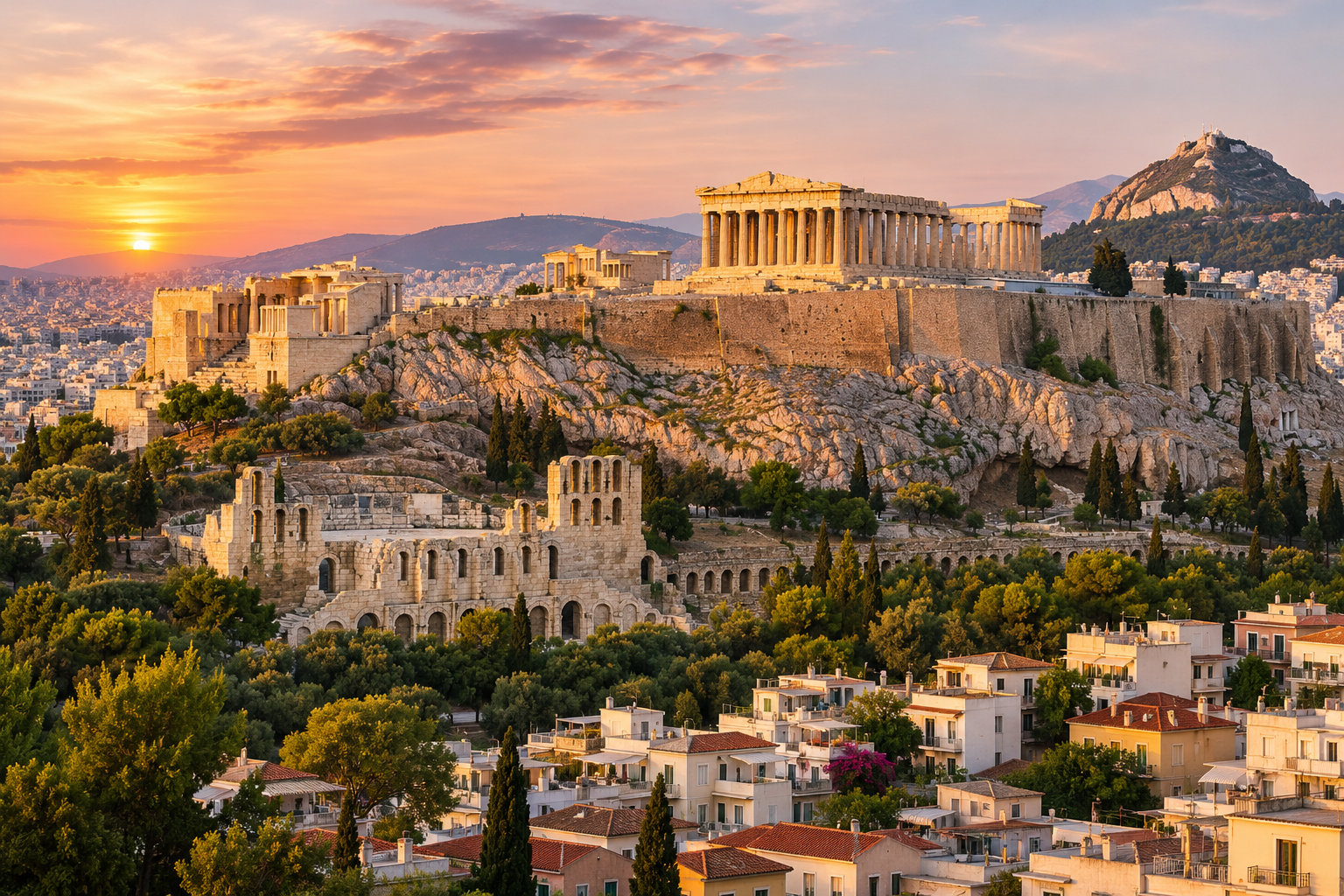
Athens becomes easier to understand when you stop treating it as a collection of isolated monuments. The Acropolis rises above the city, but its meaning extends into the streets below: the public spaces of the Agora, the slopes around Plaka, the apartment balconies of Koukaki, and the everyday commerce around Monastiraki. Three days offer enough time to see those connections without turning every meal into a hurried interval between tickets.
This route keeps most of the first two days near the historic center. The third introduces a choice: stay with archaeology or give contemporary Athens more space. It suits a first visit, particularly before a mainland journey to Nafplio and the Argolid or a slower island stay in Naxos.
Begin with the hill, then give it context
Make the Acropolis the main commitment of your first day. The ascent, exposed stone, and uneven surfaces demand more attention than a flat city walk. Wear shoes with grip, carry water, and choose an entry time that suits the season. In hot weather, avoid building a route around a long outdoor climb in the middle of the day. Book against the official site's current admission arrangements rather than relying on an old combined-ticket description.
On the summit, look beyond the familiar outline of the Parthenon. The monumental entrance of the Propylaia and the Erechtheion help explain that this was a sacred complex, shaped by different buildings and functions. Then turn outward. Seeing the city basin from above is a useful first lesson in Athens: dense neighborhoods, hills, and distant mountains surround the ancient rock.
Give the Acropolis Museum a separate, unhurried stretch of the day. Its displays place sculpture and architectural fragments in a more readable setting than the hill itself can provide. Some travelers prefer the museum first, especially in unsettled weather; others find the objects clearer after walking through the site. Either order works. Trying to compress both into the gap before an onward bus makes the experience less useful.
Let the south slope lead into an evening
After a major archaeological visit, the pedestrian streets around Dionysiou Areopagitou and Apostolou Pavlou provide a change of scale. You can see how the ancient landscape meets the modern city without needing another admission. Follow the route toward Thiseio, or settle into Koukaki for a meal and an evening in a neighborhood with daily life beyond the monument circuit.
Philopappou Hill is an optional addition, not an obligation after a tiring morning. Its paths and viewpoints offer a different relationship with the Acropolis: the monument becomes part of a wider landscape rather than the platform beneath your feet. Uneven paths and limited shade in places matter here. If energy or mobility makes another climb unappealing, a level cafe stop is a perfectly coherent ending to the day.
Give the Agora a morning of its own
Start day two with the Ancient Agora. Where the Acropolis tells a story of sacred architecture, the Agora opens a discussion about public life, exchange, and civic institutions. The Temple of Hephaestus gives the site a strong architectural focus; the reconstructed Stoa of Attalos houses its museum. Read the open ground between these buildings as part of the visit, rather than merely the space needed to get from one photograph to another.
Continue into Monastiraki when you are ready for a different rhythm. This is a busy urban crossroads, with market streets, food, shops, and passing crowds. A gradual walk into Plaka makes more geographical sense than crossing the center repeatedly for a list of disconnected stops. Plaka's neoclassical houses, churches, and sloping lanes reward attention, even where souvenir shops dominate the main routes.
Anafiotika, tucked on the Acropolis slope, is a residential enclave rather than a stage set. Keep voices low, respect doors and private steps, and accept that the most attractive lane may lead into someone's everyday space. Small-scale restraint improves this part of the walk more than adding another viewpoint.
Choose one direction for the third day
For a deeper archaeological visit, make the National Archaeological Museum the day's anchor. Its collections broaden the story beyond classical Athens and make a useful bridge to Mycenae, the Cyclades, or Crete. Allow enough attention for the objects that interest you, rather than trying to absorb every room. The museum sits outside the compact Acropolis circuit, so group nearby plans around it instead of treating it as a quick detour.
For a more urban day, begin near Syntagma, walk into the National Garden, and continue toward the Panathenaic Stadium or the residential streets of Pangrati. This gives the journey a different vocabulary: gardens, modern institutions, cafes, and neighborhood squares. Choose a museum or cultural stop along that line if it matches your interests. There is no need to fill the whole day with paid attractions.
Build the practical route around your energy
Central Athens rewards walking, but hills, heat, traffic crossings, and polished paving can make a short line on a map feel longer. The metro is useful for shifting between districts and reaching major transport connections; it does not remove the climbs within archaeological sites. Travelers who need step-free access should confirm arrangements directly for each venue, because an accessible city journey and an accessible monument visit are different questions.
Keep the last evening free of a demanding appointment. Return to a street you liked, eat at a comfortable pace, and leave some attention for the city around the table. Athens supplies enough material for a much longer stay. On a three-day first visit, the most valuable decision is choosing which thread to follow next.